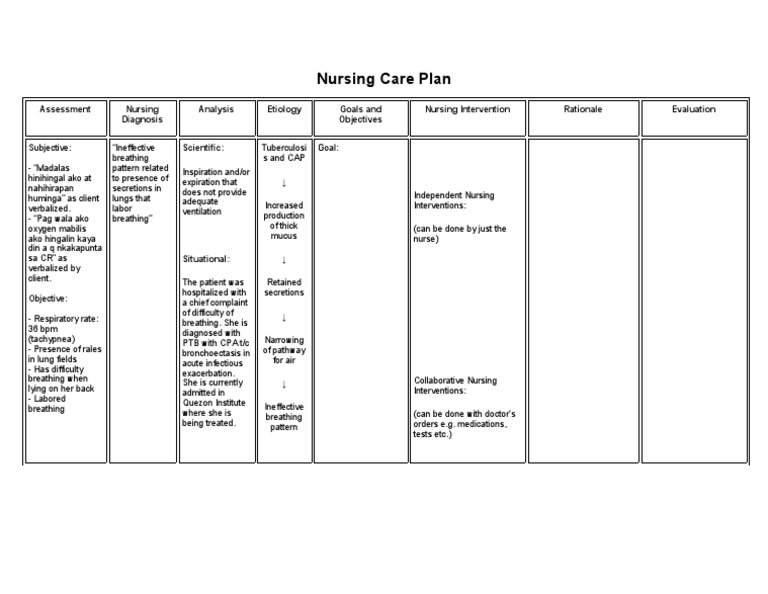
Nursing Goals For Ineffective Breathing Pattern
Nursing Goals For Ineffective Breathing Pattern - Web among the evaluated patients, 67.5% presented the nursing diagnosis ibp. Web the short term goals are for the patient to understand their treatment and demonstrate proper breathing techniques to alleviate symptoms. Web nursing care plan for ineffective breathing pattern. Ineffective airway clearance refers to the inability of the client to effectively clear. Web irregular breathing pattern; Web the nursing care plan outlines a patient who is experiencing ineffective breathing patterns related to their disease process, with subjective assessments noting tachypnea,. Web an ineffective breathing pattern requires investigation for respiratory infections, lung trauma, chronic airway changes, cancer, etc., to manage effectively. Patients with sleep apnea experience ineffective breathing patterns as the airways can become obstructed and collapse during. Web if you are a nursing student, you will want to fully understand the signs, symptoms, and treatments of ineffective breathing patterns. Web patient to increase breathing capacity. Include evidenced based rationales for each nursing intervention using your textbooks. The long term goals are for the. Objective/expected outcome ;the patient will: Listen to respiratory sounds, observe areas of diminished/absent ventilation. State whether or not the goal was met. Web irregular breathing pattern; Web goals and expected outcomes for ineffective breathing pattern improved oxygenation: Web an ineffective breathing pattern requires investigation for respiratory infections, lung trauma, chronic airway changes, cancer, etc., to manage effectively. This nursing care plan and diagnosis is for the following condition: Web pressure on the diaphragm. Objective/expected outcome ;the patient will: Web ineffective breathing pattern care plan: Web goals and expected outcomes for ineffective breathing pattern improved oxygenation: Web pressure on the diaphragm. Patients with sleep apnea experience ineffective breathing patterns as the airways can become obstructed and collapse during. (nurse assesses) altered respiratory patterns. Demonstrate an effective respiratory rate,. Position (lying flat) ineffective breathing pattern/risks: Web patient to increase breathing capacity. Web patient will maintain a patent airway and an effective breathing pattern. (nurse assesses) altered respiratory patterns. Web patient will maintain a patent airway and an effective breathing pattern. Patient will deny shortness of breath. Web among the evaluated patients, 67.5% presented the nursing diagnosis ibp. Web pressure on the diaphragm. This nursing care plan and diagnosis is for the following condition: Ineffective airway clearance refers to the inability of the client to effectively clear. The presence of crackles or rales indicate fluid in. Web the short term goals are for the patient to understand their treatment and demonstrate proper breathing techniques to alleviate symptoms. Patient will establish an effective breathing. This nursing care plan and diagnosis is for the following condition: (nurse assesses) altered respiratory patterns. Web patient will maintain a patent airway and an effective breathing pattern. Web pressure on the diaphragm. Web ineffective breathing pattern care plan: Demonstrate an effective respiratory rate,. Listen to respiratory sounds, observe areas of diminished/absent ventilation. The presence of crackles or rales indicate fluid in. Web among the evaluated patients, 67.5% presented the nursing diagnosis ibp. Web ineffective breathing pattern. Ineffective breathing pattern, dyspnea, respiratory distress. Web the following are common nursing care planning goals and expected outcomes for an ineffective breathing pattern: State whether or not the goal was met. Web the nursing care plan outlines a patient who is experiencing ineffective breathing patterns related to their disease process, with subjective assessments noting tachypnea,. The nursing care planand management. Demonstrate an effective respiratory rate,. The primary goal is to improve oxygenation and ensure adequate gas. Web the following are common nursing care planning goals and expected outcomes for an ineffective breathing pattern: Web irregular breathing pattern; Position (lying flat) ineffective breathing pattern/risks: The table 1 shows that ibp was associated with the following dc: Ineffective airway clearance refers to the inability of the client to effectively clear. Web ineffective breathing pattern care plan: Patient will establish an effective breathing pattern as evidenced by abgs and spo2 within normal limits. Position (lying flat) ineffective breathing pattern/risks: Patient will deny shortness of breath. This nursing care plan and diagnosis is for the following condition: The long term goals are for the. Web irregular breathing pattern; The nursing care planand management for dyspnea or ineffective breathing pattern typically involve assessing the underlying cause, providing immediate and appropriate interventions to alleviate the symptoms, and implementing measures to promote respiratory. Web irregular breathing pattern; Include evidenced based rationales for each nursing intervention using your textbooks. Web ineffective breathing pattern care plan: Web the nursing care plan outlines a patient who is experiencing ineffective breathing patterns related to their disease process, with subjective assessments noting tachypnea,. Web the short term goals are for the patient to understand their treatment and demonstrate proper breathing techniques to alleviate symptoms. Patient will establish an effective breathing pattern as evidenced by abgs and spo2 within normal limits. Web patient will maintain a patent airway and an effective breathing pattern. Web goals and expected outcomes for ineffective breathing pattern improved oxygenation: Web an ineffective breathing pattern requires investigation for respiratory infections, lung trauma, chronic airway changes, cancer, etc., to manage effectively. The presence of crackles or rales indicate fluid in. Patients with sleep apnea experience ineffective breathing patterns as the airways can become obstructed and collapse during. Objective/expected outcome ;the patient will: The long term goals are for the. Web the following are common nursing care planning goals and expected outcomes for an ineffective breathing pattern: State whether or not the goal was met. Web pressure on the diaphragm.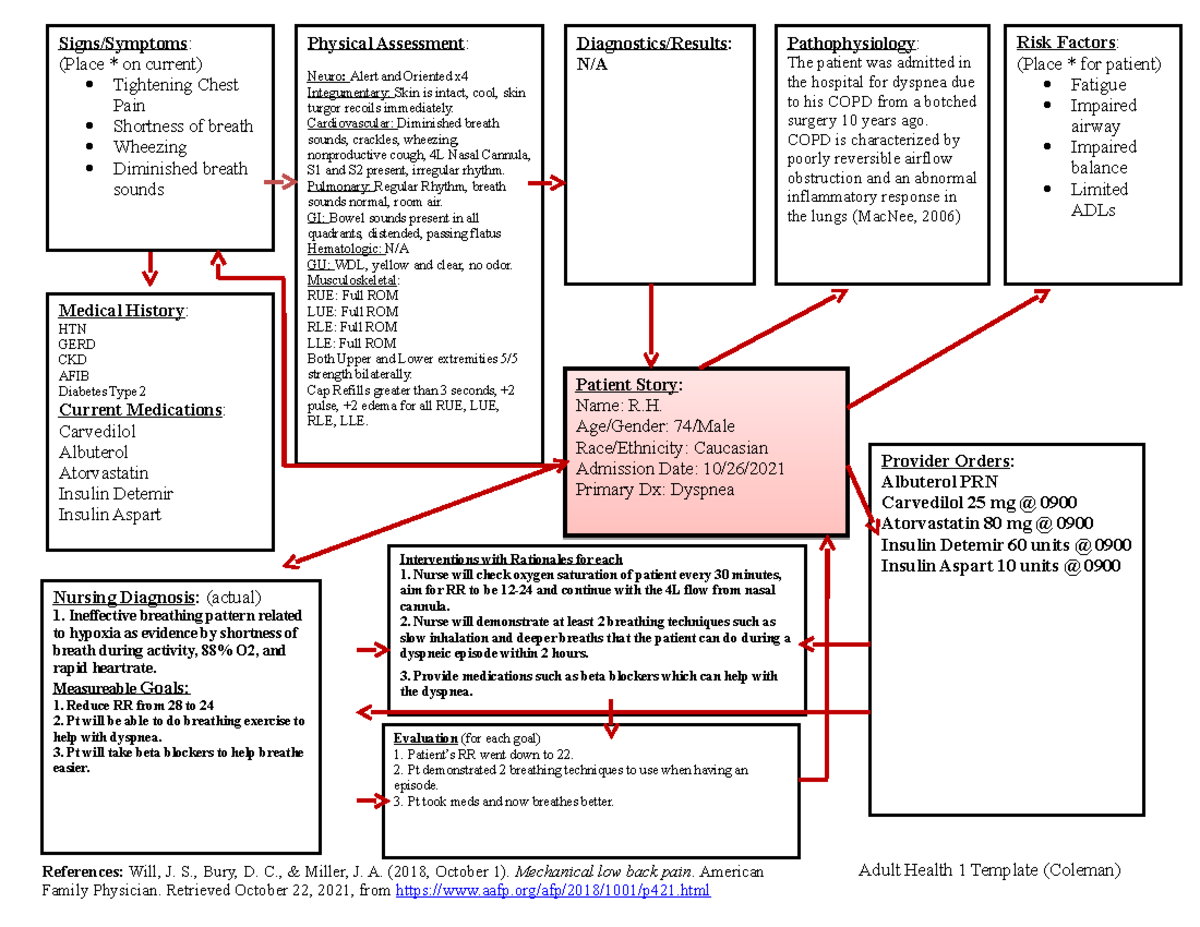
Ineffective breathing concept map notes **Interventions with
Nursing Care Plan for Ineffective Airway Clearance Respiratory Tract

SOLUTION Nursing care plan ineffective breathing pattern poliomyelitis
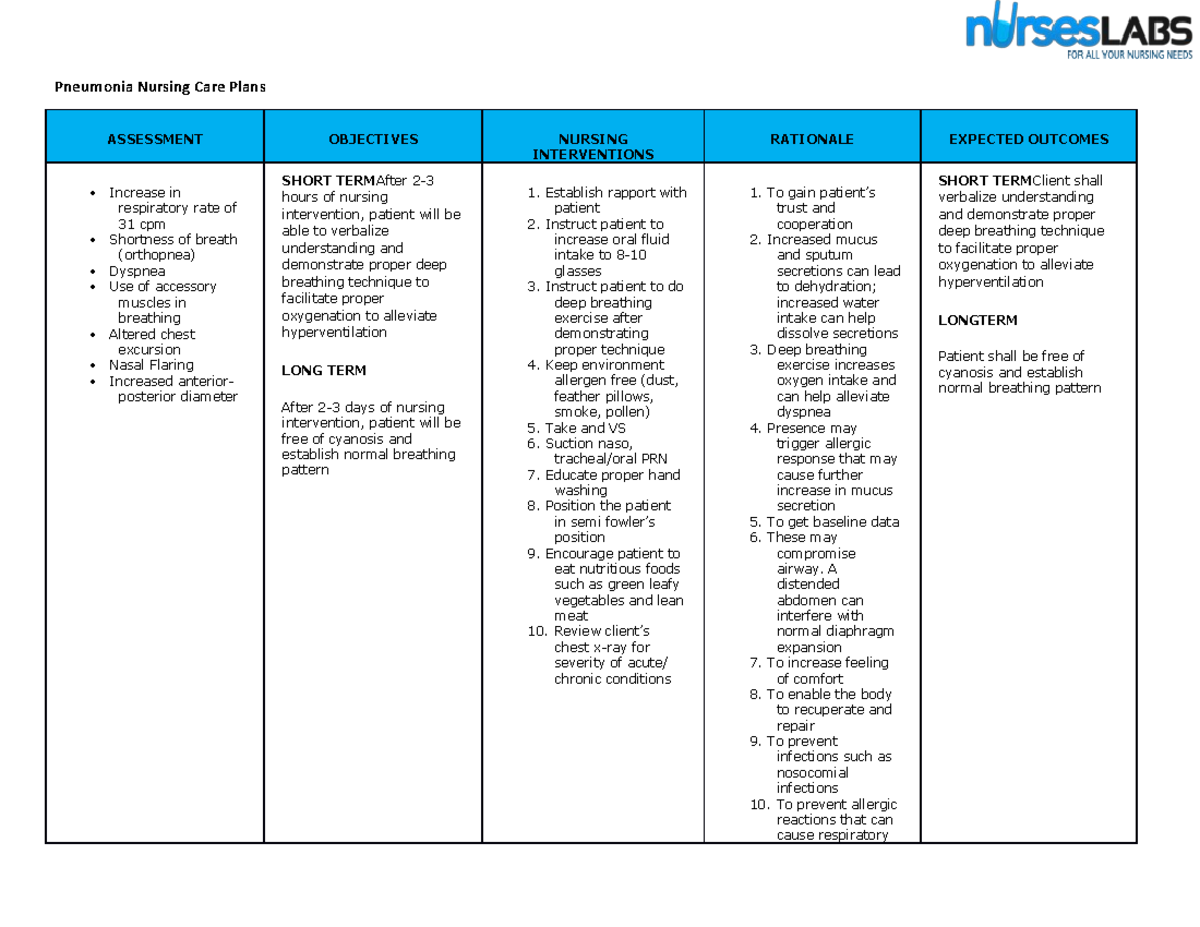
Nursing Care Plan For Ineffective Breathing
NCP ineffective breathing pattern
Ineffective Breathing Pattern Nursing Diagnosis and Nursing Care Plan
Nursing Care Plan Ineffective Breathing Pattern
NCP Ineffective Breathing Pattern Tala

Nursing Care Plan Ineffective Breathing Pattern
Ineffective Breathing Pattern Breathing Respiratory System
Web If You Are A Nursing Student, You Will Want To Fully Understand The Signs, Symptoms, And Treatments Of Ineffective Breathing Patterns.
The Table 1 Shows That Ibp Was Associated With The Following Dc:
Web Among The Evaluated Patients, 67.5% Presented The Nursing Diagnosis Ibp.
The Primary Goal Is To Improve Oxygenation And Ensure Adequate Gas.
Related Post: